

Maria Grazia Chiuri’s Collection for Fendi Embodies Power Rooted in Confidence
This fall/winter collection is all about self-possession.
There is something powerful about a designer coming full circle—not to revisit the past but to forge ahead with renewed purpose and quiet authority. Maria Grazia Chiuri’s fall/winter 2026/27 collection for Fendi isn’t merely a new seasonal lineup but also a creative homecoming. Chiuri returns to the heritage Italian house where she spent 10 years in the late 1980s/’90s under the guidance of the five Fendi sisters as accessories designer—and now as chief creative officer.
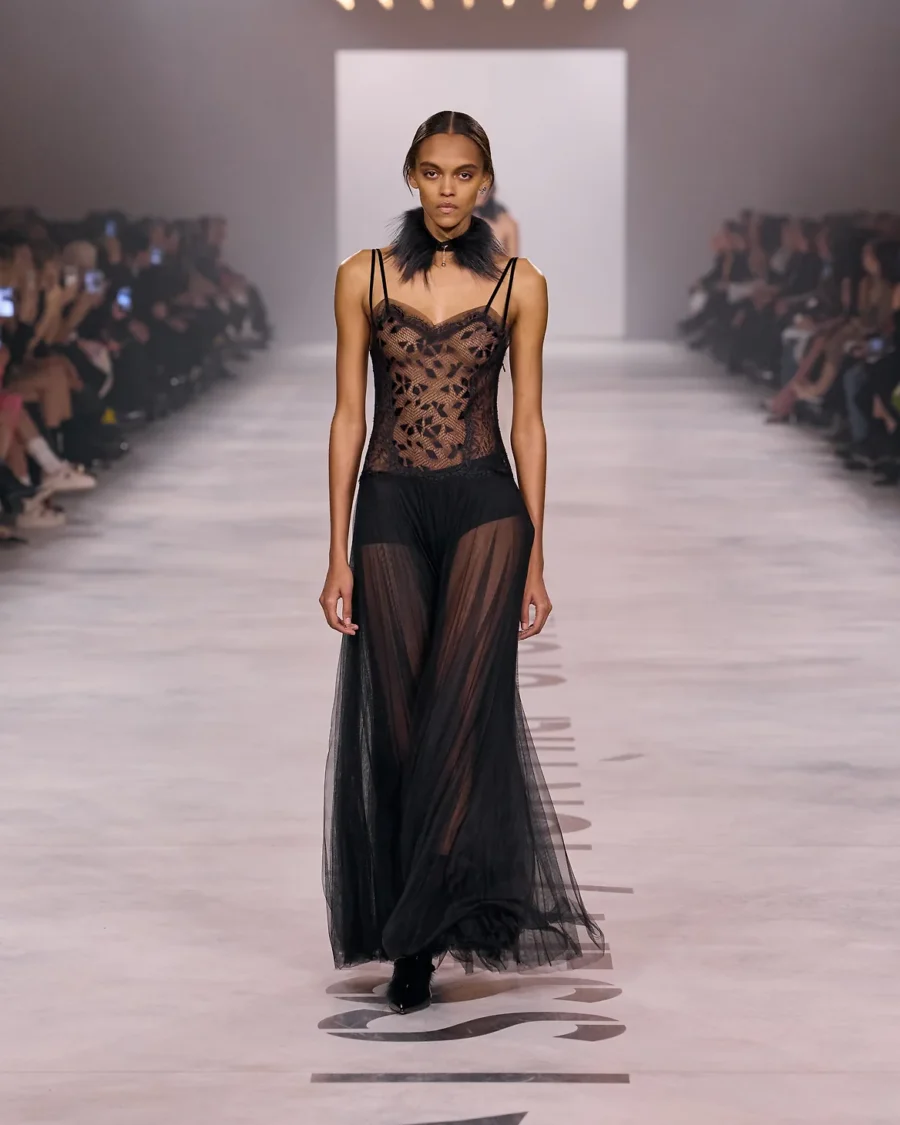
The “Less I, More Us” written on the floor of the show’s space at the Fendi Milan headquarters on Via Solari functioned as more than scenography—it was a manifesto. At its core, the message signalled a rejection of the cult of the singular fashion auteur. In an industry often driven by ego and spectacle, Chiuri has long positioned herself as a designer who foregrounds collaboration: artisans, historians, writers, and the community of women who inspire her work. By literally inscribing the words beneath the models’ feet, she grounded the collection in the idea that fashion is a collective act, conceived by many hands, worn by many lives.
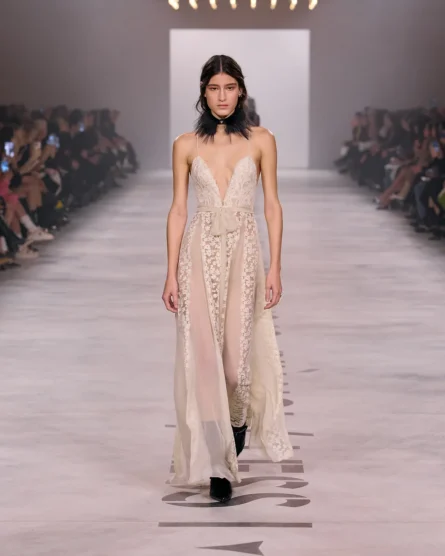
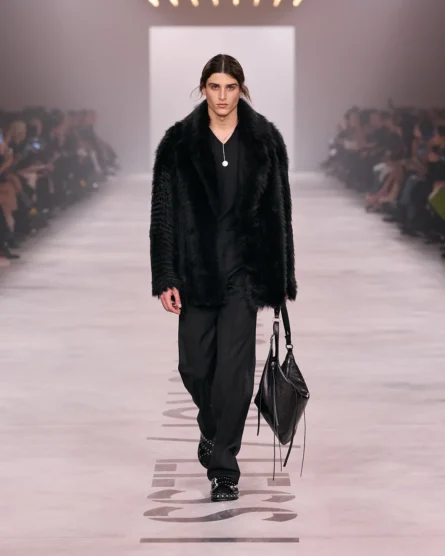
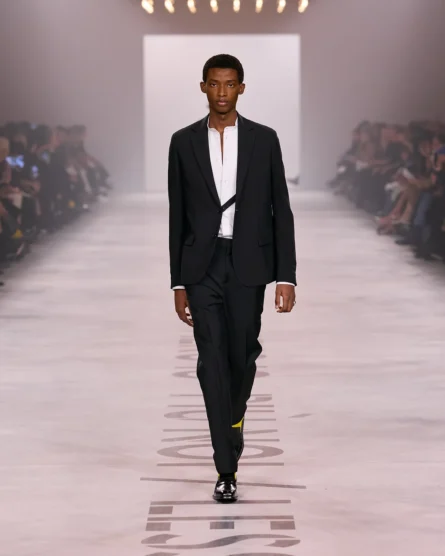
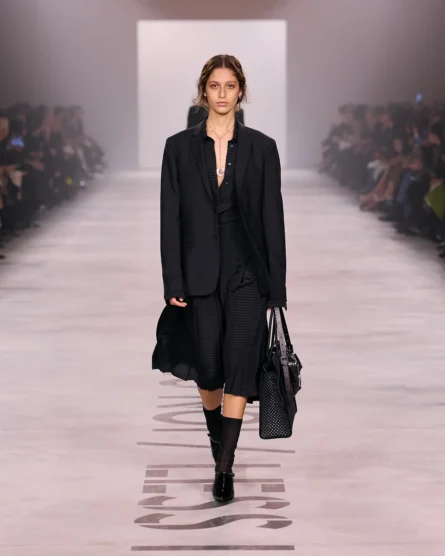
The show opened with a chain of black looks, and Chiuri’s signature was unmistakable: an emphasis on black, an affinity for tailoring, and a belief that fashion should reflect the wearer’s real life, not just a fantasy of it. Within this framework, blazers and pants took centre stage, not as afterthoughts but as the backbone of a wardrobe that traverses genders and seasons. There were recognizable elements from her time at Dior that have been seeded into Fendi: black lace, laser-cut leather, long ballet skirts, bias-cut gowns.
This collection was very much a change for Fendi, a brand known for bold colour combinations, patterns, and monograms. And so, the debate. Critics have called the collection “wearable” and “too safe.” Some voices in the fashion press and on social media have labelled it “basic,” (a Canadian tuxedo for her and another, for him) chiding it for its near absence of vibrant colour and dramatic “wow” moments. This critique—that the collection is too wearable—is a long-standing tension in Chiuri’s work. During her tenure at Dior, she was often celebrated for translating haute couture ideas into lived-in pieces. But the very quality that brought her commercial success and broad audience appeal has repeatedly been read by some as lack of theatricality.
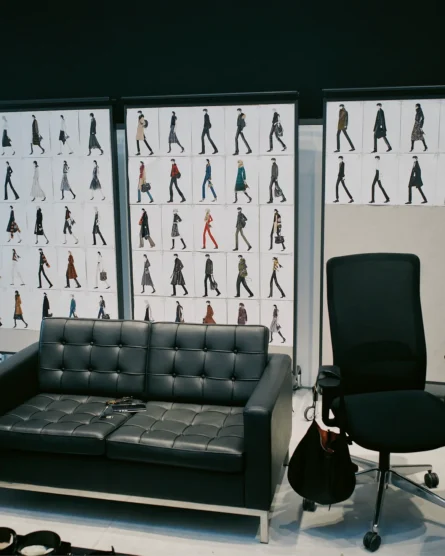
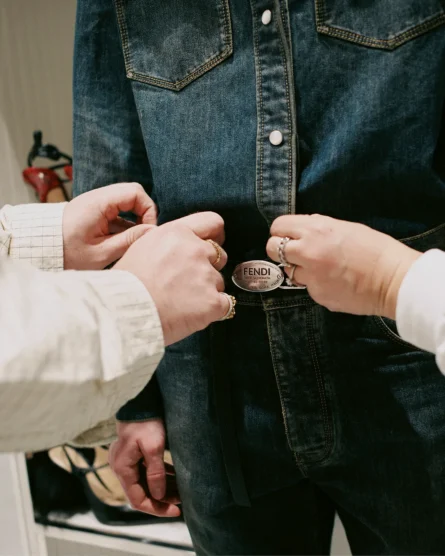
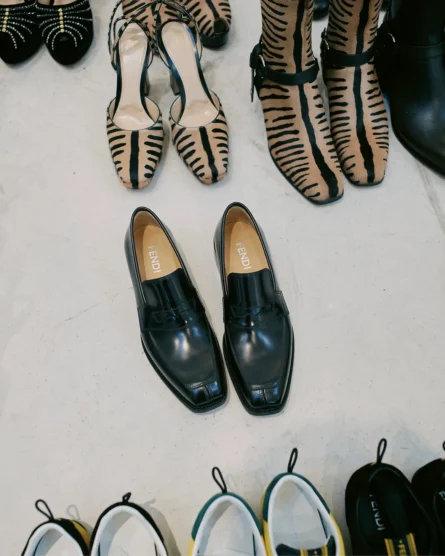
While this collection was not a showcase of Fendi’s traditional boldness, we must remember that a designer’s aesthetic is a brushstroke—personal and essential. A fashion house can be rebuilt; a voice cannot. And Chiuri’s is one defined by intellectual rigour, emotional resonance, and silhouettes that speak softly but with conviction. Her clothes are less about immediate shock and more about sustained presence—pieces that, once in a wardrobe, become familiar, vital, even empowering. In an industry that often celebrates spectacle, that alone feels like its own kind of rebellion.
I am very much a Maria Grazia Chiuri fan—her ability to translate conviction into craft and to weave emotion into clothes that feel both personal and wearable while championing a vision of femininity that is modern and quietly radical. The Roman designer’s debut collection for the 101-year-old Roman fashion house is a strength that doesn’t need spectacle to be seen or heard. Chiuri understands that fashion, at its best, is not armour for performance but a companion to lived experiences. In an industry enamoured with volume and virality, this Fendi collection is a reminder that conviction can be quiet. And sometimes, the most radical gesture is refinement.