

Falling In Love With the Many Sides of Curaçao
Located in the south Caribbean sea, it is a place of natural beauty that sits waiting to be discovered around every corner, down every path, often hiding in plain sight.
On a touristy strip of Curaçao, with a colourful waterslide on one end and a trendy beach club on the other, and large brand-name hotels and cruise ships dotting the shore, lies another world.
Here, in the middle of the city, visitors will find the Curaçao Rif Mangrove Park: a national park spanning nearly 30 acres of saltwater canals lined with tangled mangrove trees. Opened in 2022, the park feels like its own little city within a city. Even though it’s in the heart of this Caribbean island nation, the minute that one’s kayak enters the park’s waters, the outside world fades away. In its place is nothing but the sounds of paddles gently breaking the water’s surface, yellow sugarthief birds’ happy chirps, and the commentary of the park’s marine rangers, who offer tidbits of information about these incredible trees—some of them 100 years old—and their swampy habitat.
Such is the magic of Curaçao: it is a place of natural beauty that sits waiting to be discovered around every corner, down every path, often hiding in plain sight. Unlike so many other Caribbean islands with stretches of uninterrupted white-sand coastline, Curaçao must be peeled back in layers, each one revealing a deeper sense of connection to the land and its majesty.
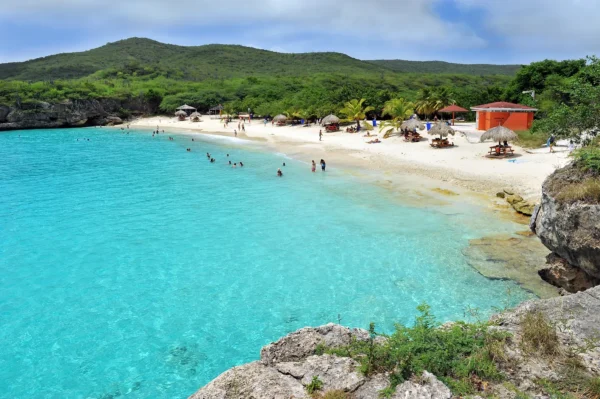
There are beaches aplenty, but the hunt to find them is part of their charm. Many of the country’s best are found in Westpunt—the westernmost point of the island—about a 45-minute drive from the cultural centre of Willemstad. Here in the west, explorers will find such delights as Playa Kalki, with pure white sand and vibrant aqua water. Or there is Playa Kenepa Grandi, with shimmering turquoise water and excellent snorkelling. Even still, there is also Playa Jeremi, with soft brown sand and more of a laidback, local vibe. And at Playa Forti, the beach is darker and rockier, and the views are unparalleled. This country is a game of choose your own adventure.
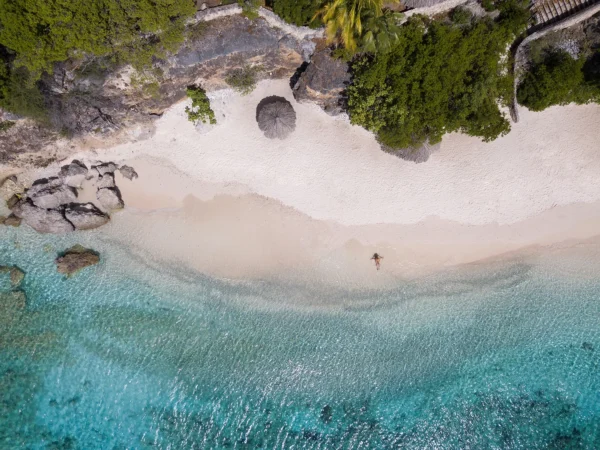
Located in the south Caribbean sea, Curaçao is one of the ABC Islands—with Aruba and Bonaire—that are part of the Kingdom of the Netherlands. As such, it’s a melting pot of cultures: it’s home to more than 60 nationalities, and the average person speaks at least four languages. Not bad for a population of just 156,000.
“We all live happily together on one island,” says Tirzah Statia, a local tour guide and experience curator who was born and raised in Curaçao. “We accept everyone on the island, and we don’t divide the locals from the tourists. We want everyone to have the same experience. Everyone is welcome.”
The notion that everyone is welcome is not merely a nice string of words—it’s truly believed and shared. The people are warm, welcoming, and jovial, and seem thrilled to show off their little patch of paradise. “We try to be as authentic as we can,” Statia says. “Even as things change, we are still true to ourselves.”
In the historic capital city of Willemstad, candy-coloured buildings dot the shoreline like giant jelly beans. The city is a panoply of colour, covered in vibrant public artworks by the likes of Francis Sling and Bagira Tizraoui, whose large-scale pieces can be found on various buildings, each alleyway an opportunity to unearth a welcome surprise. There are many galleries and artist studios, too, including that of Merly Trappenberg, whose eye-catching paintings of Black women are pure joy. “Curaçao is like an open-air museum,” Statia says. “Everything you see and touch has a story to tell.”
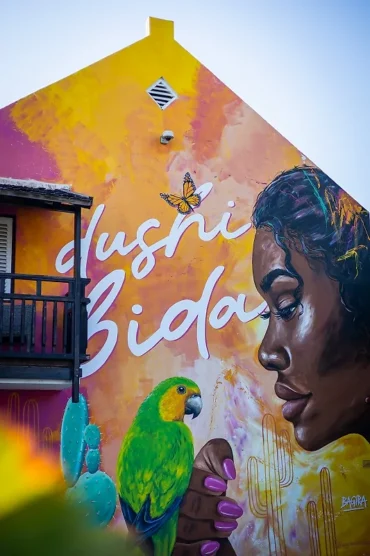
The local language is Papiamentu: a dizzying, intriguing mix of Dutch, Spanish, Portuguese, English, and even Hebrew. If visitors only learn one word in Papiamentu, let it be dushi, a popular term of endearment among locals.
Speaking of locals, they love to eat, and the country delivers with an excellent array of options. There is Sal the Kitchen, owned by two local brothers and serving up Caribbean ingredients with an elevated twist, including a delightful catch-of-the-day fish with coconut milk sauce, basil oil, salsa macha, and roasted sweet potato purée, and a showstopping mushroom carpaccio with parmesan, hazelnuts, and herb vinaigrette.
Or there’s Mosa/Caña, a casual family-style fusion restaurant with notable dishes including tuna tartare with ponzu dressing and decadent sticky ribs. A short drive away, in Kurá Hulanda Village, part of the Willemstad historic area UNESCO World Heritage Site, is Caleo: a modern share-plate restaurant that uses a wood-fired grill for its excellent dishes, which range from Spanish octopus with red-pepper cream and lemon-herb vinaigrette to picanha steak with a side of charred broccolini. Kurá Hulanda is also where eaters will find House of Stroop, considered the maker of the island’s best stroopwafels: giant, chewy, gooey, warm, and oh so addicting.
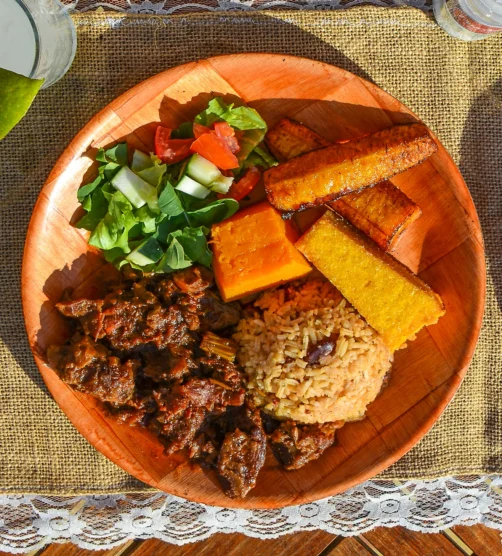
For something particularly local, Komedor Kryioyo is a popular spot with multiple locations. Its chicken stew with a side of rice and beans is warming and complex, while the cashew nut cake is sugary and comforting. To indulge, order a side of fried polenta topped with thick, gooey slices of gouda cheese. Also consider Hòfi Mango, a nature park and farm with an on-site restaurant serving fresh, local food, with much of the produce grown on the farm, which makes a simple lunchtime salad come alive with flavour and colour.
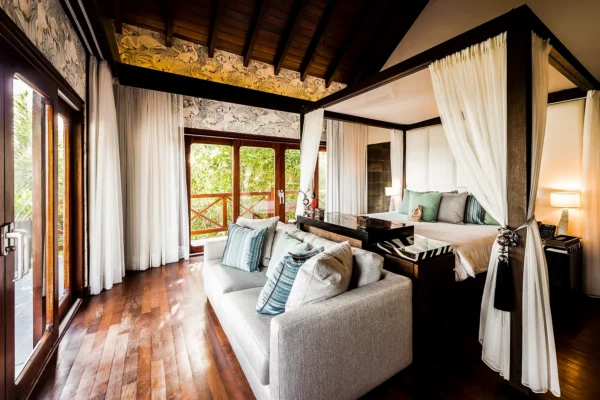
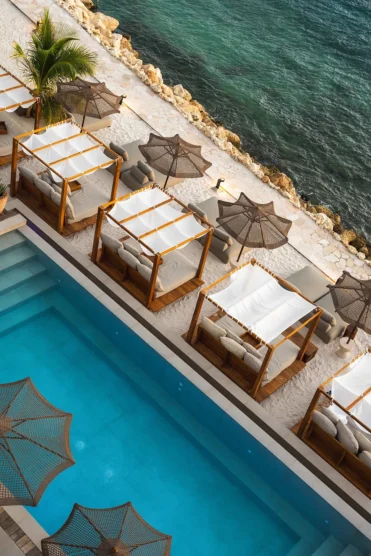
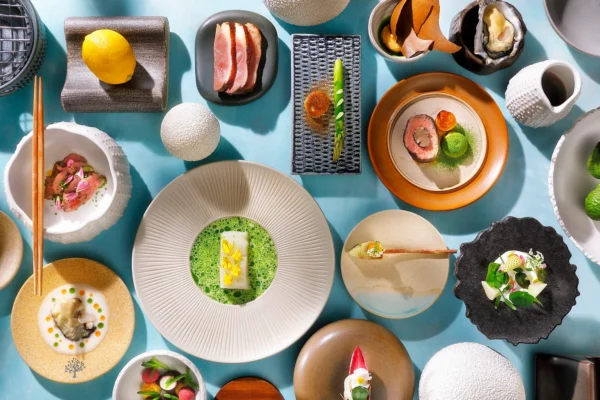
When it’s time for rest, Art Hotel Curaçao is within walking distance of many restaurants and shops. The boutique adults-only property, which just opened in July 2025 and was designed by Studio Piet Boon, is contemporary luxury at its finest, with plenty of modern furnishings, artworks by the likes of Ellen Spijkstra, and incredible views of the ocean. The tasting menu at the hotel restaurant, The Lemon Tree—the Caribbean outpost of a popular Dutch restaurant—is also not to be missed. The five-course meal takes diners on a journey through the flavours and ingredients of the island, from eggplant three ways (it’s one of the most common crops grown in Curaçao) to pastichi: a bouncy, chewy dough stuffed with savoury meats.
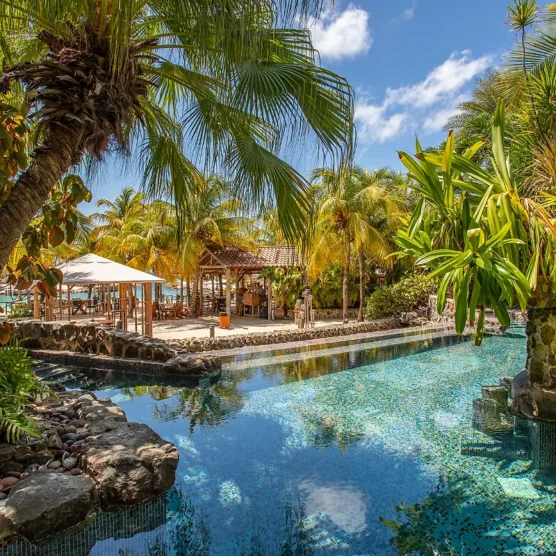
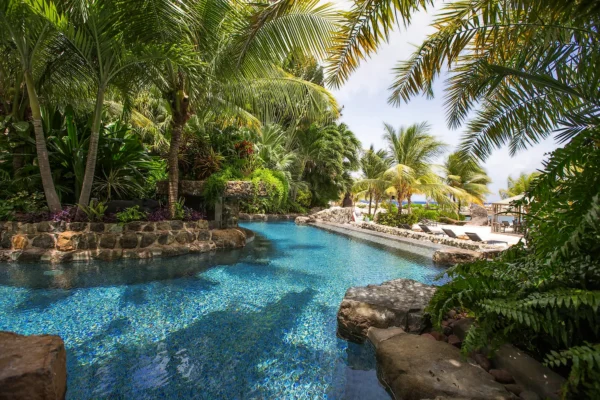
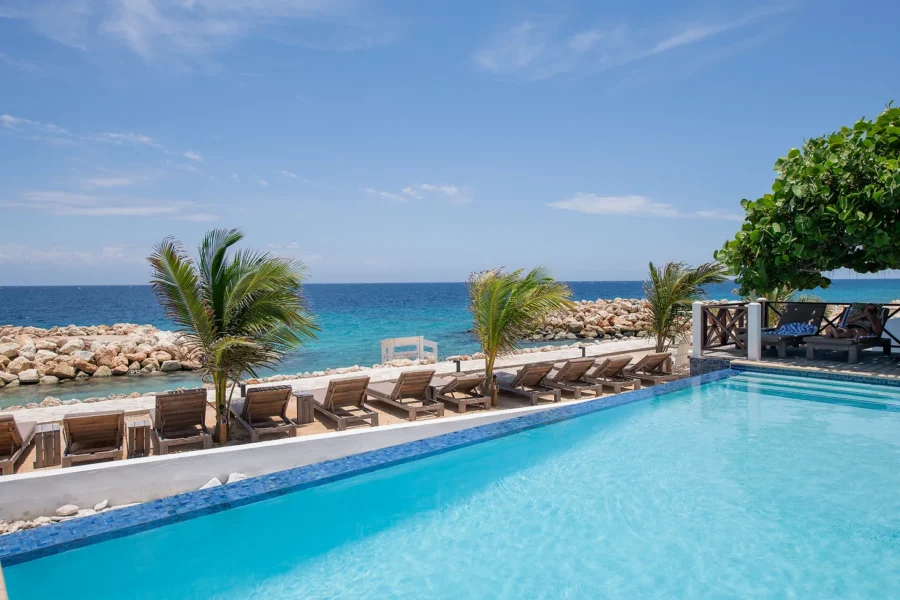
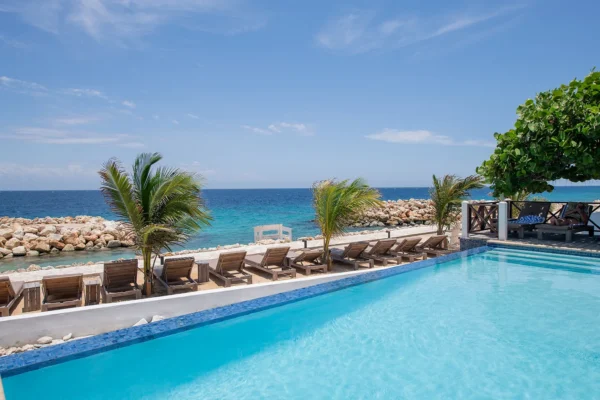
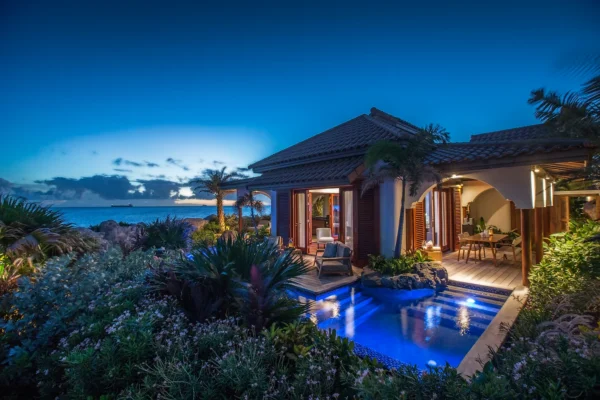
For something more secluded, Baoase Luxury Resort is easily the island’s best. A short drive from Willemstad, Baoase feels like its own little universe, with a private beach, two restaurants, infinity pool, and open-air massage cabanas. Accommodations range from multi-bedroom villas and beach houses to expansive one-bedroom suites with outdoor bathtubs or private pools. Baoase’s Culinary Beach Restaurant is right on the sand, and its miso-glazed cod with braised cabbage is a surefire winner, the perfect sustenance for a warm, leisurely evening.
This past November, Curaçao made history when its men’s soccer team qualified for the 2026 World Cup after a 0-0 draw against Jamaica. It is the smallest nation ever to qualify, and did so for the first time in its history. At the time, that news was the talk of the island, its locals abuzz with delight at the thought of watching their players on the world stage. Their pride is a tonic.
“We love our country,” Statia says. “We want to share it with everyone in the world.”